

Not knowing the difference between dry rot and wet rot can turn a small repair into major structural damage.
Both are forms of timber damage, but they develop under different conditions and cause different levels of harm. Wet rot occurs when timber remains damp over time, usually due to leaks or poor ventilation, and it tends to remain contained. Dry rot, however, is more destructive. It can spread through hidden areas, even across brickwork, damaging timber far from the original moisture source.
According to the Property Care Association, damp and timber decay are among the most reported issues in UK properties, especially in homes built before 1930. Understanding these differences early helps prevent serious structural timber damage rot and protects the lifespan of your property.
In this blog, we will discuss dry rot vs wet rot difference at the core, how to identify them, and treatments.
Key Takeaways
- Timber decay usually begins when moisture exceeds 20%, allowing fungi to break down wood fibres and cause structural timber damage rot.
- Wet rot typically develops at 50–60% moisture levels and remains confined to the damp source.
- Dry rot is more aggressive, growing several millimetres per day and enabling dry rot to spread in buildings through masonry and hidden voids, increasing structural risk.
- The dry rot vs wet rot difference lies in spread and severity; wet rot stays localised to moisture, while dry rot travels beyond it and damages timber across multiple areas.
- For accurate diagnosis and long-term protection, consulting experts like Damp2Dry Solutions helps identify hidden decay, apply targeted treatments, and prevent recurrence.
What is Wet Rot?
Wet rot is a type of fungal decay that attacks timber when it stays damp for long periods. In simple terms, it happens when wood absorbs too much moisture and cannot dry out. In UK properties, this is often linked to leaking pipes, rising damp, blocked air bricks, or poor ventilation.
The process starts when timber moisture levels rise above normal. Research in the UK shows that decay can begin once moisture content exceeds around 20%, with wet rot fungi developing between roughly 20–28%. At this point, fungi begin to break down the wood fibres that give timber its strength.
Wet rot is dangerous because it weakens structural elements like joists, beams, and floorboards. Over time, the wood becomes soft, brittle, and unable to carry loads.
If left untreated, this form of structural timber damage rot can lead to sagging floors or even failure of key structural parts.
What is Dry Rot?
Dry rot is one of the most serious timber decay causes in homes. It attacks timber even when the original moisture source is limited. It is caused by a fungus called Serpula lacrymans, which develops when wood moisture levels usually rise above 20%, and conditions remain poorly ventilated.
Once established, it does not stay confined like wet rot. Instead, dry rot spread in buildings can occur through hidden areas, as the fungus produces strands that travel across plaster, brick, and masonry to reach new timber.
This is why many homeowners ask, how fast does dry rot spread. Under the right conditions, it can grow several millimetres per day and quickly affect large sections of a property.
Dry Rot Vs Wet Rot Difference In A Table
| Attribute | Wet Rot | Dry Rot |
| Moisture requirement | Requires 20-50% timber moisture | Requires 20-30% moisture |
| Fungal type | Multiple fungal species | Single species (Serpula lacrymans) |
| Spread behaviour | Localised to damp area | Can travel through masonry and voids |
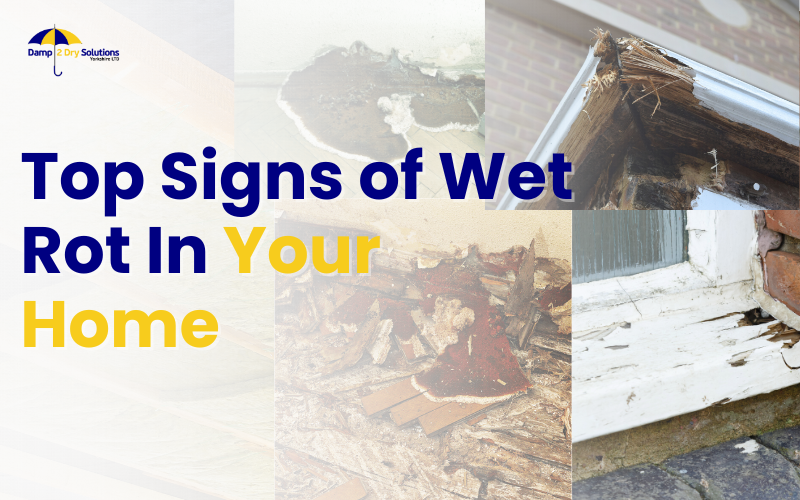
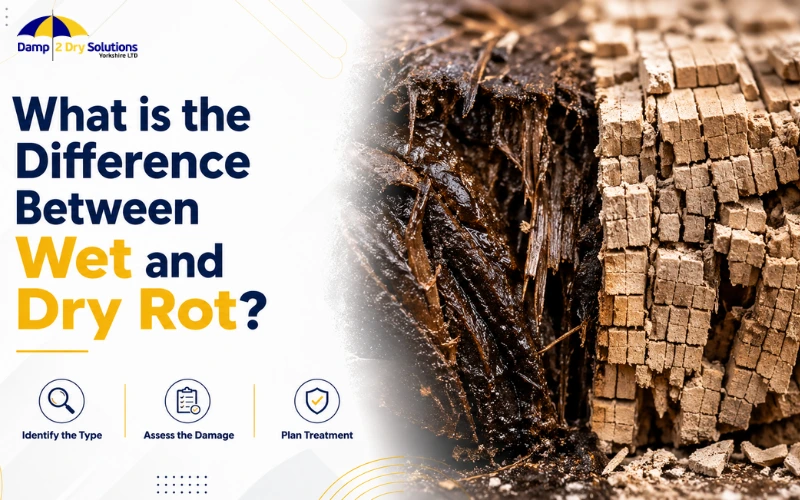
| Timber condition | Soft, spongy, darkened | Dry, brittle, cracked (cuboidal) |
| Structural impact | Local weakening | Severe structural failure risk |
| Control method | Remove the moisture source | Requires invasive treatment and isolation |
How to Identify Wet & Dry Rot in Timber?
Correct diagnosis starts with understanding how each fungus changes the timber at a structural level. Both occur due to moisture, but their behaviour and visible patterns differ significantly.
| Identification Factor | Dry Rot in Timber | Wet Rot in Timber |
| Timber condition | Brittle and breaks easily, even if surface appears dry | Soft, spongy, and compressible under pressure |
| Cracking pattern | Deep cuboidal cracking across the grain | Cracks develop along the grain (longitudinal) |
| Surface appearance | May look dry but internally decayed | Darkening, bleaching, or uneven staining visible |
| Fungal growth | White or grey cotton-like mycelium present | Fine, web-like strands (hyphae/mycelium) on surface |
| Advanced signs | Fruiting bodies (mushroom-like growths) in later stages | No large fruiting bodies typically visible |
| Odour & spores | Musty smell with red spore dust spread | Damp, earthy musty smell without spore dust |
Screwdriver Test For Identifying The Rot
The screwdriver test is a practical method to assess structural timber damage rot by measuring resistance, fibre integrity, and moisture condition within timber.
Steps:
1. Gently insert a screwdriver or a knife into the timber surface at multiple points.
2. Especially inspect near joints, ends, or damp-prone areas.
3. Apply steady pressure rather than force, and observe penetration depth and resistance.
Diagnosis:
In wet rot, the tool penetrates deeply with low resistance, and the extracted fibres appear moist, fibrous, and stringy. This indicates a cellulose breakdown in high-moisture conditions. The timber often compresses rather than fractures.
In dry rot, penetration may vary, but the key indicator is brittle failure under slight leverage. The wood breaks into cuboidal fragments, showing loss of both cellulose and lignin. The surface may seem dry, but internal decay causes void formation and reduced load-bearing capacity.
This distinction reflects the dry rot vs wet rot difference in structural damage.
Common locations of Dry and Wet Rot
Rot rarely appears in open, visible areas. Understanding these locations helps explain the dry rot vs wet rot difference and how each type behaves inside a building.
Common locations of wet rot in timber
- Bathrooms and kitchens
- Roof spaces and rafters
- Subfloors and crawl spaces
- Window frames and external joinery
- Behind appliances or plumbing zones
Common locations of dry rot in buildings
- Floor joists and floorboards
- Roof timbers and structural beams
- Behind plaster and wall voids
- Around windows, skirting boards, and door frames
- Masonry-adjacent timber
To avoid dry rot spreads in buildings, one must take proper measures or call a damp expert.
Note: You can read our blog on signs of Wet Rot to know more about it.
Treatments for Dry and Wet Rot in Homes and Offices
Treating rot is not just about applying chemicals. It starts with fixing the root problem, moisture. Both types come from timber decay causes linked to water ingress, poor airflow, and long-term damp exposure.
1. Fix the moisture source first
No treatment works if the timber remains damp.
- Repair leaking pipes, roofs, or guttering
- Improve ventilation in subfloors, basements, and roof voids
- Use dehumidifiers in high-condensation areas like offices and kitchens
This step is critical for both wet rot treatment in homes and dry rot control. You can visit this link to get more info on dry rot early signs.
2. Treatment for wet rot (localised approach)
Wet rot stays near the moisture source, so treatment is more direct:
- Remove and replace severely softened or spongy timber
- Dry out surrounding wood to reduce moisture below 20%
- Apply fungicidal preservatives to prevent regrowth
- Improve airflow to stop future damp build-up
In offices, this often applies to window frames, flooring near plumbing, and roof timbers.
3. Treatment for dry rot (structural and invasive)
Dry rot spread in buildings is more complex
- Remove all infected timber, including hidden sections
- Strip back plaster around affected zones to expose the spread
- Treat masonry with fungicidal solutions to stop fungal travel
- Replace timber using pre-treated or resistant materials
This is essential where there are signs of dry rot in floorboards, such as cracking, brittleness, or uneven floors.
4. Prevent recurrence with long-term measures
- Maintain consistent ventilation in closed spaces
- Monitor moisture levels in structural timber
- Use damp-proofing systems where required
- Schedule periodic property inspections, especially in older UK buildings
5. When to involve a specialist
If rot is widespread or affecting structural timber, professional assessment is necessary. Damp proofing companies like Damp2Dry Solutions carry out detailed surveys, identify hidden spread, and apply targeted treatments. This is especially important where dry rot has moved beyond visible areas, as improper handling can allow regrowth and further structural damage.
Conclusion
We hope this article has given you a better understanding of dry rot vs wet rot difference. We have shared some tips for identifying the difference, common locations, and treatment as well. However, self-examination and treatment are not always successful and do not give long-term results.
We have to keep in mind that even though a timber treatment specialist can help remove the fungal growth and repair the damage, if the medium is still favourable, we might be confronted with a reappearance of the dry or wet rot.
FAQs
1. What are the differences between wet rot and dry rot?
The dry rot vs wet rot difference lies in moisture and spread. Wet rot stays in damp areas and stops once moisture is removed. Dry rot spreads beyond the source, travelling through hidden spaces and causing deeper structural damage over time.
2. How can you recognise the beginning stages of dry rot in wood structures?
Early signs relate to moisture-linked timber decay causes. Timber may look dry, but becomes brittle, develops small cracks, and shows white fungal growth. A musty smell and hidden decay behind walls often indicate early-stage dry rot.
3. What are the treatments for wet rot?
Effective wet rot treatment in homes starts with fixing moisture sources like leaks or poor ventilation. Damaged timber is removed, surrounding wood is dried below 20% moisture, and fungicidal preservatives are applied to prevent further decay.
4. What is the long-term effect of untreated wet and dry rot in a house?
If ignored, both lead to structural timber damage rot, weakening joists, beams, and floors. Over time, this can cause sagging structures, unsafe load-bearing capacity, and costly repairs, especially when decay spreads unnoticed.
5. How to Treat Dry Rot?
Treatment depends on how fast does dry rot spreads. In many cases, infected timber must be removed, surrounding areas exposed, and masonry treated with fungicide. Moisture control is essential to stop regrowth and prevent further structural impact.
6. What are the common signs of dry rot in floorboards?
Common signs of dry rot in floorboards include brittle wood, deep cracking, uneven or springy floors, and a musty smell. These symptoms often indicate hidden decay beneath the surface and possible structural weakening.